Georgia Tech researchers are leaders in the study of large infrastructure systems including energy production and power grids, water systems, transportation and communication networks, and structures and buildings. They emphasize quality growth and work to improve energy access, mobility, housing, accessibility, and health simultaneously in urban and rural environments. Increasingly, their work leverages sensing at scale, computing, and data analytics to model and analyze human experiences and resource use in the built environment. BBISS brings together research teams including architects, planners, engineers, data scientists, policy experts, and others who work together to lay the foundation for tomorrow’s resilient, resource-efficient, and livable cities and communities.
Research Highlights
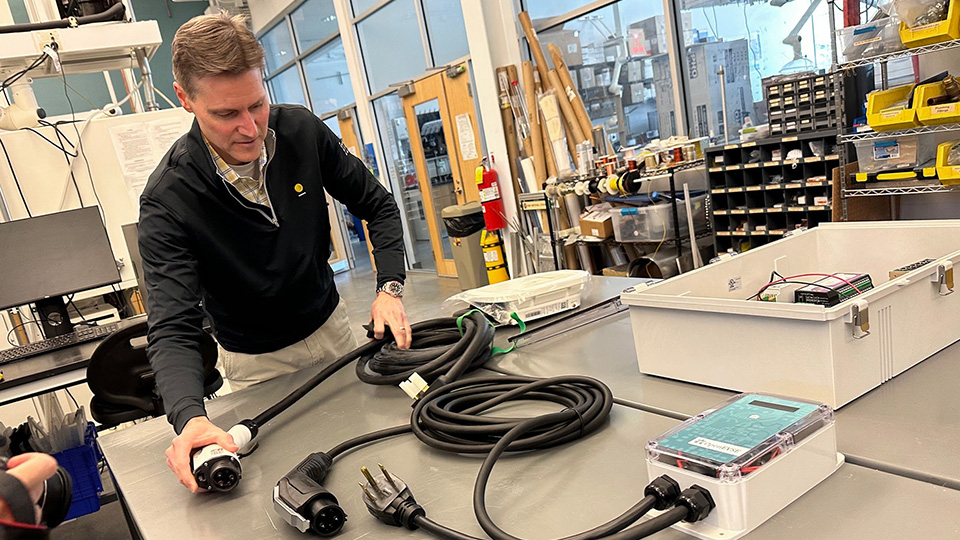
Driving Change: Georgia Tech Experts Lead in Electrification of America’s Roads
With historic investments from major players in the EV space, including Rivian, Kia, and Hyundai, the state of Georgia is uniquely positioned to serve as a leader in this effort. As the state's leading research institute, Georgia Tech is on the cutting edge of the movement. The transportation sector is the largest greenhouse gas emitter in the U.S. at nearly 30%, with passenger vehicles accounting for around 80% of the sector's total output1 as of 2019. Electric vehicles are widely regarded as a budding solution to reduce emissions, but even as both demand and production continue to increase, EVs currently account for around 1% of the cars on America's roadways.
Research Centers and Institutes

Center for Urban Resilience and Analytics
All urban areas now face heightened risks from extreme heat, floods, droughts, and worsening air quality due to changing climate. Rapidly urbanizing areas exacerbate those risks through increased impervious surfaces, expanded settlements, and diminished wildlands. We established the Center for Urban Resilience and Analytics, a new interdisciplinary research center at Georgia Tech, to synergize research addressing critical urban challenges in the College of Design, across campus, and beyond. This research center consolidates a set of Georgia Tech faculty who are nationally recognized leaders in the growing field of urban resilience planning.
Energy, Policy, and Innovation Center
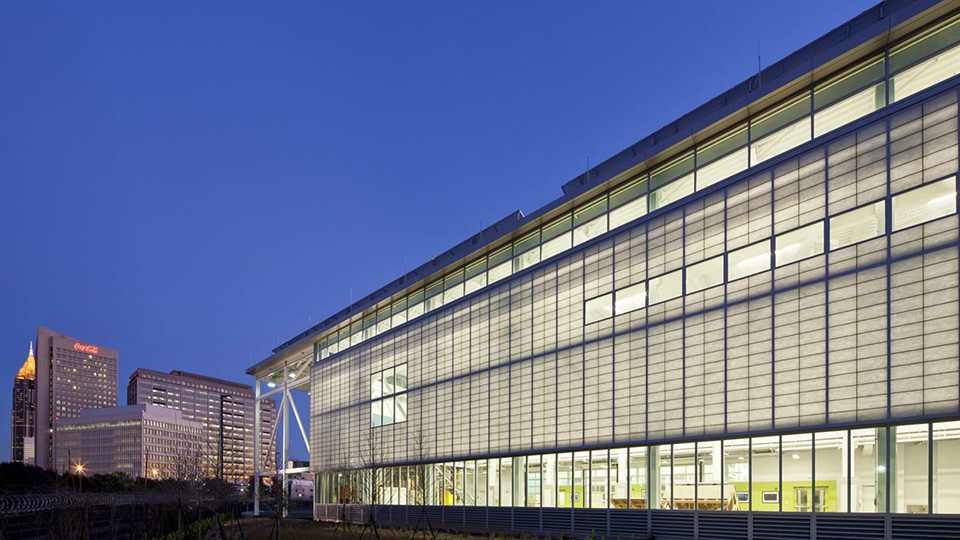
The Energy, Policy, and Innovation Center operates as a division of the Strategic Energy Institute at the Georgia Institute of Technology. It was created to provide an unbiased and interdisciplinary framework for stimulating innovation in energy policy and technology for the Southeast region of the United States. Although based on the campus of Georgia Tech, the center will tap into regional and national expertise within academia, businesses, non-governmental organizations (NGO), and research facilities.
Researchers Spotlight


- Sustainable Systems
- Renewable Bioproducts
- Energy
- Matter and Systems

- Sustainable Systems
- Energy