Rigorous research in economic and business theory to solve sustainability is a catalyst for transformative change: Addressing our most pressing environmental and societal needs will not only require proactive business leadership, but also forward-looking changes to economic incentives, environmental policies, and governance mechanisms that drive decisions by businesses and consumers. By promoting collaborations across the fields of economics, public policy, management, and environmental science and engineering, we foster a deeper understanding of the relationships between economic systems, corporate strategies, and societal impacts. We support faculty in disseminating evidence-based policy and managerial insights to policy makers and business practitioners.
Research Highlights
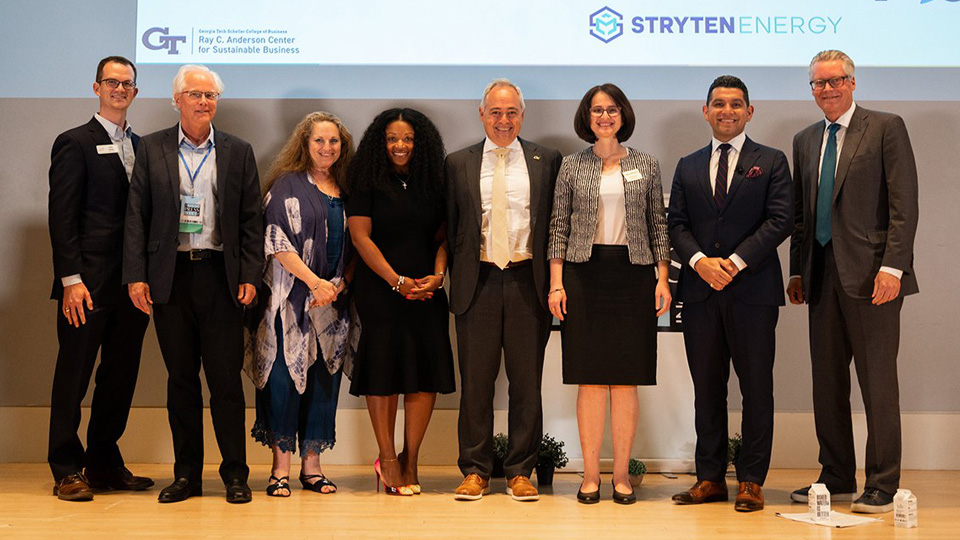
School of Public Policy Faculty Integral to Launch of Drawdown Georgia Business Compact
The Ray C. Anderson Center for Sustainable Business in the Scheller College of Business recently announced the launch of the Drawdown Georgia Business Compact. Members of the School of Public Policy contributed to research that was integral in developing the road map for Drawdown Georgia, which ultimately led to the development of the Compact.
The Compact will bring companies together to spur climate action in Georgia to achieve net zero carbon emissions in the state by 2050 through a just, competitive, and sustainable transition. Signatories now number at about 48 companies. Marilyn Brown, Regents Professor and Brook Byers Professor of Sustainable Systems in the School of Public Policy, led a multi-university research collaboration to evaluate 75 high-impact climate solutions, ultimately identifying 20 of these as particularly promising for Georgia over the next ten years.
Research Centers and Institutes
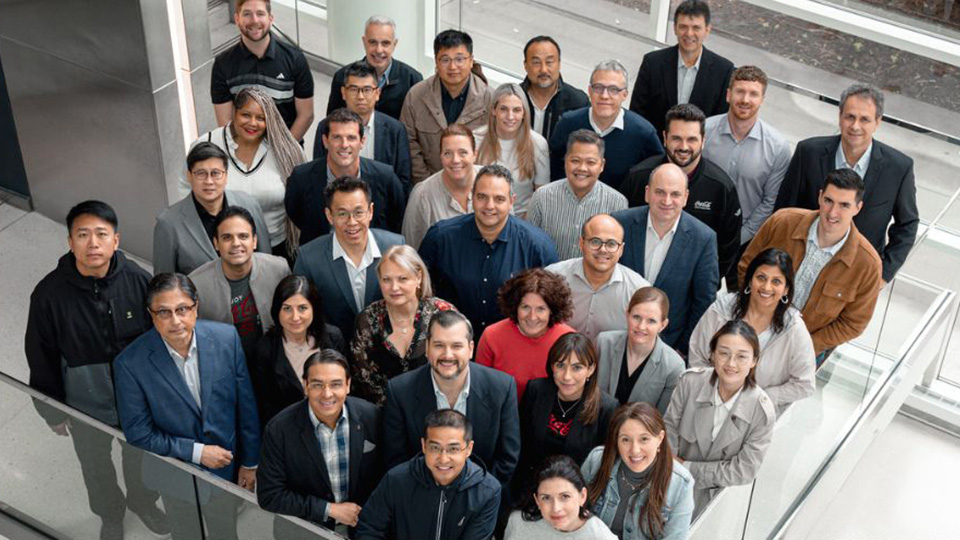
Ray C. Anderson Center for Sustainable Business
The Ray C. Anderson Center for Sustainable Business focuses on educating tomorrow's business leaders, partnering with industry practitioners, and supporting high-impact research to accelerate the development of sustainable business practices. The urgency and opportunity for sustainable business practices have never been greater. Our Center focuses on amplifying our students' passion for problem-solving, our faculty's cutting-edge research, and the power of industry to create a better world for current and future generations. We work across four thematic areas: climate action, circular economy, social performance and human rights, and environmental, social, governance (ESG) leadership.
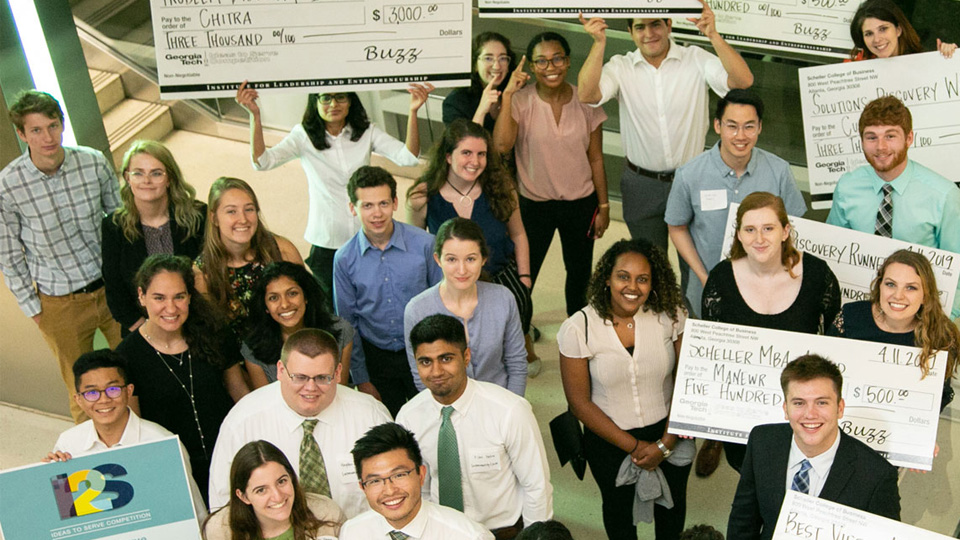
Institute for Leadership and Social Impact
The Institute for Leadership and Social Impact (ILSI) is an interdisciplinary initiative that promotes servant leadership and organizational practices that contribute to a more just, caring, and ethical world. Through workshops, coursework, grants, and a major lecture series, ILSI empowers our community to account for the economic, social, and environmental impacts of businesses. We bring together students, researchers, business leaders, and social entrepreneurs in ways that stimulate core-level change. We also foster leadership development and collaboration between academia, for-profits, and non-profits, promoting the spirit of entrepreneurship and a broad sensitivity to human-centered values.
Our ultimate goal is to enhance the capacity of Georgia Tech to produce graduates who are motivated and prepared to contribute to just, caring, and sustainable societies.
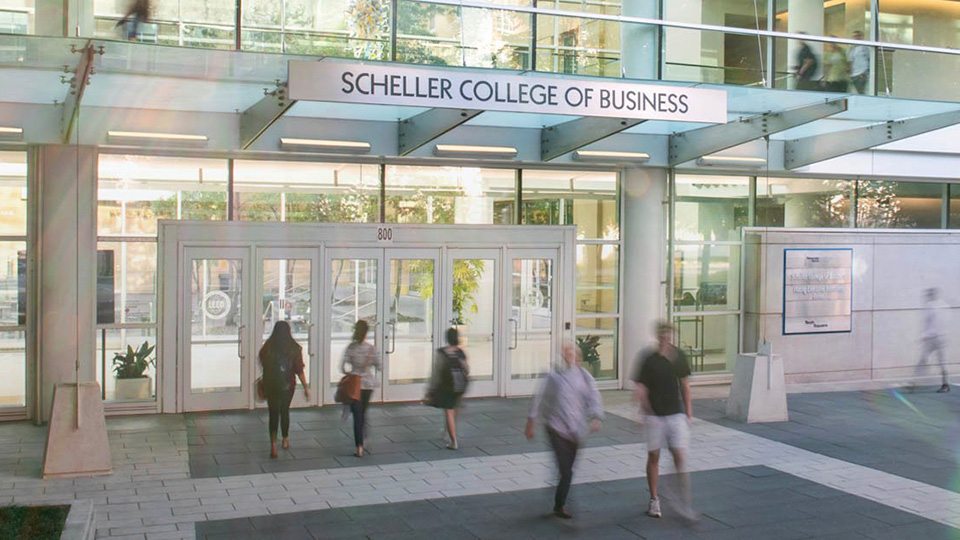
Center for International Business Education and Research
CIBER was created in 1993 and is one of the 15 national resource centers of excellence in international business funded by the U.S. Department of Education. It is administratively located in the Georgia Tech Scheller College of Business and also collaborates with the Ivan Allen College of Liberal Arts. Our mission is to ensure the long-term international economic competitiveness of the United States through support of research, business education initiatives, and corporate outreach activities.
Researchers Spotlight


- Sustainable Systems
- Space

- Sustainable Systems
- Data Engineering and Science
- Energy